AMD · Not specified

Instinct MI250

MI250

The AMD Instinct MI250 accelerator is designed to deliver outstanding performance for HPC and AI workloads. It is built on the AMD CDNA architecture, offering high compute capabilities for demanding tasks.
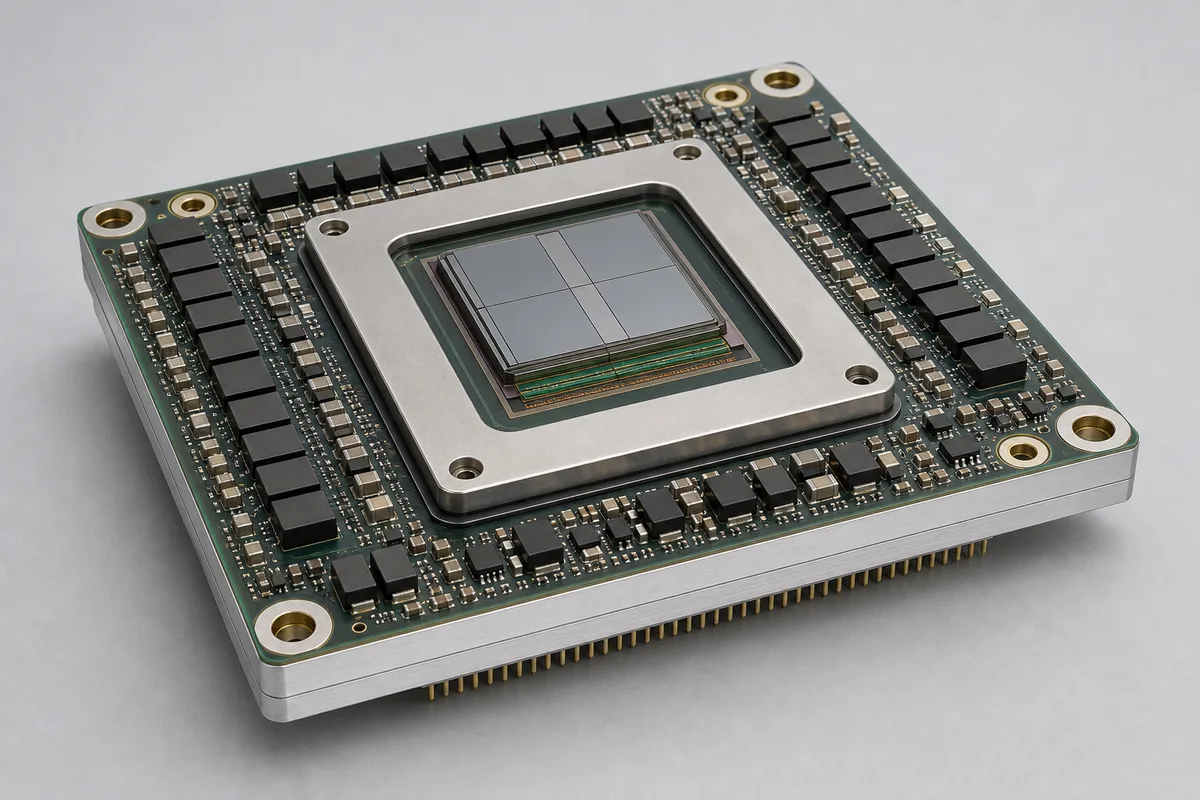
Instinct MI250 MI250
VRAM
128GB GB
FP32 TFLOPS
95.7 TFLOPS
CUDA Cores
14336
TDP
Not specified W

Provider Marketplace

Cheapest
$0.00/hour
Starting from
Best Value
$0.00/hour
Starting from
Enterprise Choice
$1.35/hour
Starting from

All Cloud Providers

2 Options available
RunPod favicon
RunPodCheapest
On-DemandGlobal Availability
$0.00/ hour
Estimated Cost
Provision
Runcrate favicon
On-DemandGlobal Availability
$1.35/ hour
Estimated Cost
Provision

Compute Performance

FP6447.9 TFLOPS TFLOPS
FP3295.7 TFLOPS TFLOPS
TF32Not Supported TFLOPS
FP16383 TFLOPS TFLOPS
BF16383 TFLOPS TFLOPS
FP8Not Supported TFLOPS
INT8Not Published TOPS
INT4Not Supported TOPS

Architecture

MicroarchitectureCDNA 2
Process NodeTSMC N7
Die SizeDual-die (total ~1074 mm²)
Transistors58.2B (dual-die)
Compute Units220 CUs (dual-die, 110 per die)
Tensor CoresAI Accelerators: 880 (dual-die, 440 per die)
RT Cores
Matrix EngineMatrix Core
Base Clock1500 MHz
Boost Clock
Transformer Engine
Sparse AccelerationSupported (structured sparsity)
Dynamic PrecisionSupported (FP16/BF16/FP32/INT8)

Memory & VRAM

Memory TypeHBM2e
Total Capacity128GB GB
Bandwidth3.2TB/s
Bus Width8192-bit
HBM Stacks8
ECC SupportYes (Inline)
Unified MemoryNot Supported
Compression
NUMA Awareness
Memory PoolingNot Supported

Connectivity & Scaling

InterconnectxGMI (Infinity Fabric)
GenerationInfinity Fabric 3
IB Bandwidth800 GB/s
PCIe InterfacePCIe Gen 4 x16
CXL Support
Topology8-GPU fully connected (OAM baseboard, xGMI mesh)
Max GPUs/Node8
Scale-OutYes (InfiniBand HDR/NDR, RoCE v2 via NIC)
GPUDirect RDMAYes
P2P MemoryYes (via xGMI)

Virtualization

MIG SupportNot Supported
MIG PartitionsN/A
SR-IOVSupported
vGPU ReadinessNot Supported
K8s ReadinessSupported via Device Plugin
GPU SharingSR-IOV, Time-Slicing
Virt EfficiencyNear bare-metal (vendor claim)

Power & Efficiency

TDP500 W W
Peak Power550-560 W
Idle Power70-90 W
Perf / Watt0.42 TFLOPS FP64/W
PSU RequiredN/A
Connectors2x PCIe 8-pin
Thermal LimitsOperating up to 85°C GPU temperature
EfficiencyN/A

Physical Design

Form FactorSXM (SXM4 module)
FHFLN/A
Slot WidthN/A
Dimensions160 mm x 127 mm
Weight1.5–1.8 kg
CoolingPassive (external cold plate/liquid cooling required)
Rack DensityHigh (designed for dense GPU server platforms, e.g., 8-way OAM/SXM trays)

Thermals & Cooling

AirflowRequires server chassis airflow (Not Published)
Temp Range0°C to 45°C
ThrottlingThermal-based clock reduction at Tjunction limit
Noise LevelNot Applicable (Passive Module)
Liquid CoolingAir-cooled
DC HeatHigh (rack-scale deployment recommended)

Software Ecosystem

CUDANot Supported
ROCmROCm 5.x supported
oneAPINot Supported
PyTorchOfficially supported
TensorFlowCommunity supported
JAXExperimental via ROCm
HuggingFaceCommunity support
Triton ServerLimited/Experimental
DockerOfficial container images available
Compiler StackROCm LLVM-based stack
Kernel OptimUpstream Linux kernel support for AMD CDNA2 architecture
Driver StabilityProduction stable

Server & Deployment

OEM AvailabilityTier-1 OEMs: Dell, HPE, Supermicro
Preconfigured4U 8-GPU systems, 2U 4-GPU systems
DGX/HGXCore of HGX baseboards
Rack-ScaleInfiniBand scale-out, NVLink Switch System
Edge DeployNot typically suited for edge deployment due to high TDP
Ref ArchitecturesNVIDIA MGX, SuperPOD

System Compatibility

CPU PairingDual-socket EPYC 7003 class recommended
NUMAStandard NUMA behavior
Required PCIeNot Applicable (SXM/OAM)
MotherboardSXM2 socket required; platform-specific server motherboards
Rack PowerContact vendor for rack power planning
BIOS Limits
CXL ReadyNot Supported
OS CompatRHEL and Ubuntu LTS supported; Windows support not published

Benchmarks & Throughput

Structured Sparsity

Not Supported

Multi-GPU Scalability

Scaling Efficiency

Single GPUThe Instinct MI250 offers high single-GPU efficiency due to its advanced architecture and high memory bandwidth.
2-GPUScaling between two GPUs is efficient, but limited by PCIe Gen4 bandwidth of 32GB/s, as the MI250 does not support NVLink.
4-GPUScaling across four GPUs is further constrained by PCIe lane contention, impacting P2P bandwidth and efficiency.
8-GPUScaling to eight GPUs is significantly limited by PCIe bandwidth, leading to diminishing returns without NVLink or NVSwitch.
64+ GPUAt large scale, InfiniBand or RoCE v2 overhead becomes significant, requiring careful network topology design to mitigate bottlenecks.

Scaling Characteristics

Cross-Node LatencySupports GPUDirect RDMA, which helps reduce cross-node latency, but efficiency depends on network configuration and bandwidth.
Network BottlenecksThe primary bottleneck is the Host-to-Device bridge due to the lack of NVLink, compounded by PCIe bandwidth limitations.
ParallelismSupports Data, Model, Pipeline, and Tensor Parallelism, compatible with frameworks like DeepSpeed and Megatron for efficient distributed training.

Workload Readiness

LLM Training

The Instinct MI250 is highly suitable for training large language models, particularly in multi-node configurations, due to its high memory bandwidth and large VRAM capacity. It can efficiently handle 70B models and potentially scale to 400B+ models with a multi-node setup.

LLM Inference

The MI250 offers strong inference capabilities with high throughput, making it suitable for large-scale LLM inference tasks. Its architecture supports efficient token-per-second processing and ample KV cache for large models.

Vision Training

The GPU's architecture and memory bandwidth make it well-suited for vision training tasks, providing high throughput for large datasets and complex models.

Diffusion Models

The MI250's high computational power and memory capacity make it effective for training and running diffusion models, which require significant resources for both training and inference.

Multimodal AI

With its robust architecture, the MI250 can efficiently handle multimodal AI tasks, integrating vision, language, and other data types in complex models.

Reinforcement Learning

The GPU's high performance and memory capacity support large-scale reinforcement learning environments, enabling efficient training of complex models.

HPC / Simulation

The MI250 excels in HPC simulations with strong FP64 performance, making it ideal for scientific and engineering simulations requiring double precision.

Scientific Computing

The GPU is highly effective for scientific computing tasks, offering excellent performance for simulations and computations that require high precision and large-scale parallel processing.

Edge Inference

Due to its high power consumption and large form factor, the MI250 is not suitable for edge inference applications, which typically require low-power, compact solutions.

Real-Time Serving

The MI250 can serve real-time AI applications effectively, provided that power and cooling requirements are met, due to its high throughput and processing capabilities.

Fine-Tuning

The GPU's large VRAM and high memory bandwidth make it highly efficient for full fine-tuning of large models, providing ample resources for complex tasks.

LoRA Efficiency

While the MI250 is optimized for high-capacity tasks, it can still efficiently handle LoRA fine-tuning, though its capabilities are more aligned with full-scale model training.

Market Authority

Supercomputer Usage

Used in Oak Ridge National Laboratory's Frontier supercomputer (Top500 #1 as of June 2024), and in HPE Cray EX systems.

Research Citations

Cited in peer-reviewed publications describing Frontier supercomputer and exascale computing research (e.g., Science, Nature, IEEE journals).

Community Benchmarks

Benchmarks published by Oak Ridge National Laboratory and HPE for Frontier; limited independent community benchmarks.

GitHub Support

AMD ROCm support available; optimizations present in select ML/DL frameworks (PyTorch, TensorFlow) and HPC libraries.

Key Strengths

The MI250 excels in high-performance computing and AI training tasks.

  • ·HPC Performance: Optimized for high-performance computing with excellent throughput.
  • ·AI Training: Strong performance in AI training due to high core count and memory bandwidth.
  • ·Energy Efficiency: Designed for energy-efficient performance in data centers.

Limitations

The MI250 has some limitations in terms of availability and compatibility.

  • ·Availability: Limited availability in certain regions and platforms.
  • ·Compatibility: Requires specific infrastructure for optimal deployment.

Expert Insight

The Instinct MI250 represents a powerful alternative for diversified workloads. When comparing cloud providers, consider not just the hourly rate, but also the interconnect bandwidth (InfiniBand/NVLink) and regional availability which can significantly impact total cost of ownership for large-scale training.

Glossary Terms

FP32 TFLOPS
VRAM
TDP
Cores
Information updated daily. Cloud pricing subject to vendor availability.