AMD · December 2022

Radeon RX 7900 XT

RX 7900 XT

The AMD Radeon RX 7900 XT is a high-performance consumer graphics card based on the RDNA 3 architecture. It targets gamers and content creators seeking powerful 4K and high-refresh-rate gaming experiences. Key differentiators include its advanced ray tracing capabilities and efficient power consumption compared to previous generations.
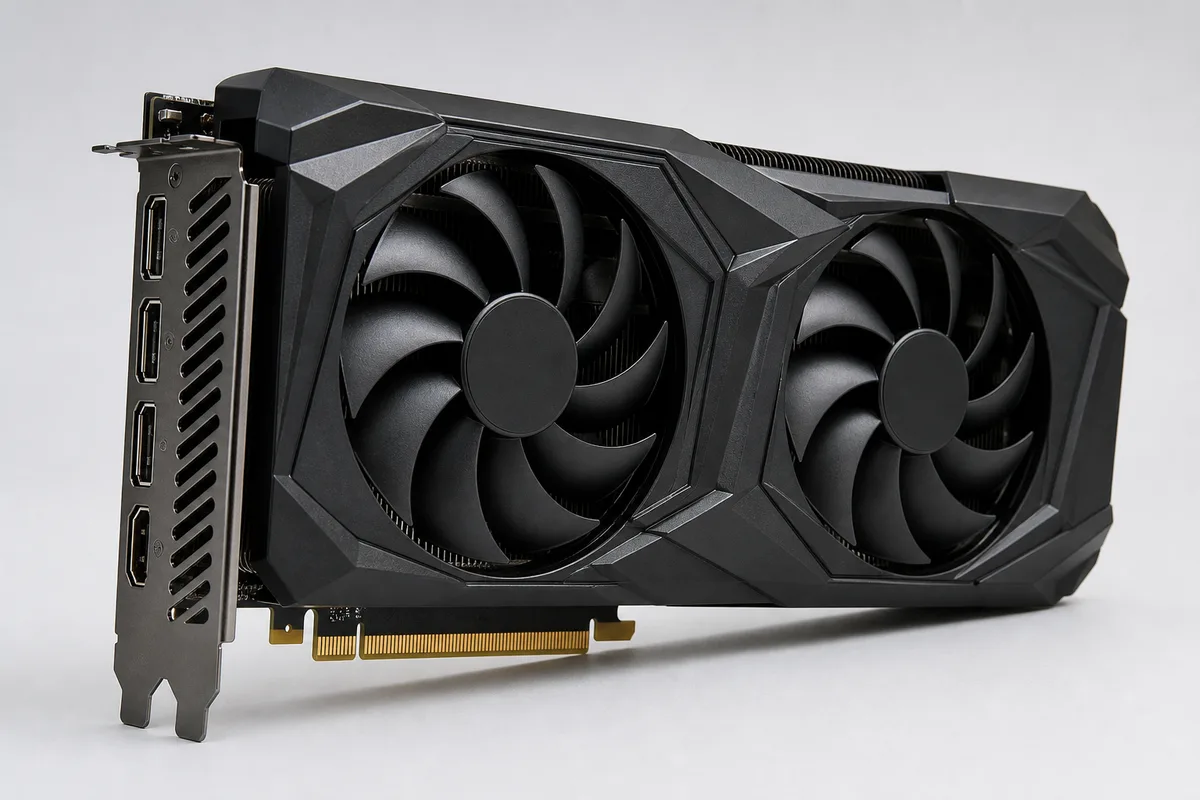
Radeon RX 7900 XT RX 7900 XT
VRAM
20GB GB
FP32 TFLOPS
51.6 TFLOPS

Provider Marketplace

Cheapest
$899.00/month
Starting from
Best Value
$899.00/month
Starting from
Enterprise Choice
$899.00/month
Starting from

All Cloud Providers

1 Options available
Vast.ai favicon
Vast.aiCheapest
On-DemandGlobal Availability
$899.00/ month
Estimated Cost
Provision

Compute Performance

FP641.3 TFLOPS TFLOPS
FP3251.6 TFLOPS TFLOPS
TF32Not Supported TFLOPS
FP16103.2 TFLOPS TFLOPS
BF16Not Supported TFLOPS
FP8Not Supported TFLOPS
INT8206.4 TOPS TOPS
INT4Not Supported TOPS

Architecture

MicroarchitectureRDNA 3
Process NodeTSMC N5 + 6nm (chiplet)
Die SizeGCD: 300 mm², MCDs: 37 mm² each (6x)
Transistors57.7B (total)
Compute Units84 CUs
Tensor CoresAI Accelerators: None
RT Cores2nd Gen, 84 RT Accelerators
Matrix Engine
Base Clock1500 MHz
Boost Clock2400 MHz
Transformer Engine
Sparse AccelerationNot Supported
Dynamic Precision

Memory & VRAM

Memory TypeGDDR6
Total Capacity20GB GB
Bandwidth800GB/s
Bus Width320-bit
HBM Stacks
ECC Support
Unified MemoryNot Supported
Compression
NUMA Awareness
Memory PoolingNot Supported

Connectivity & Scaling

InterconnectPCIe
GenerationPCIe Gen 4
IB Bandwidth32 GB/s
PCIe InterfacePCIe Gen 4 x16
CXL Support
TopologyPCIe peer-to-peer
Max GPUs/Node4
Scale-OutYes
GPUDirect RDMA
P2P Memory

Virtualization

MIG SupportNot Supported
MIG PartitionsN/A
SR-IOVLimited
vGPU ReadinessSupported (AMD MxGPU)
K8s ReadinessSupported via Device Plugin
GPU SharingSR-IOV, Time-Slicing
Virt EfficiencyNear bare-metal (vendor claim)

Power & Efficiency

TDP315 W W
Peak Power330-350 W
Idle Power15-25 W
Perf / Watt0.42 TFLOPS/W (FP32, typical)
PSU Required700 W (recommended system PSU)
Connectors2 x 8-pin PCIe
Thermal LimitsMax GPU temperature: 110°C (junction)
EfficiencyN/A

Physical Design

Form FactorPCIe card
FHFLFull Height, Full Length (FHFL)
Slot Width2.5 slots
Dimensions276 x 135 x 51 mm
Weight1.5–1.8 kg
CoolingActive air cooling (triple-fan)
Rack DensityStandard workstation/server GPU; not optimized for high rack density

Thermals & Cooling

AirflowActive cooling (vendor-specific CFM)
Temp Range0°C to 45°C
ThrottlingThermal-based clock reduction at Tjunction limit
Noise Level
Liquid CoolingAir-cooled
DC HeatLow (workstation class)

Software Ecosystem

CUDANot Supported
ROCmROCm 5.x supported
oneAPINot Supported
PyTorchCommunity supported
TensorFlowCommunity supported
JAXExperimental via ROCm
HuggingFaceCommunity support
Triton ServerLimited/Experimental
DockerCommunity images available
Compiler StackROCm LLVM-based stack
Kernel OptimStandard driver-based support
Driver StabilityRapid-release cadence

Server & Deployment

OEM AvailabilityTier-1 OEMs: Dell, HPE, Supermicro
Preconfigured4U 8-GPU systems, 2U GPU-accelerated servers
DGX/HGXNot applicable for DGX or HGX systems
Rack-ScalePCIe connectivity, suitable for InfiniBand or Ethernet scale-out
Edge DeploySuitable for edge deployments with adequate cooling, considering TDP around 300W
Ref ArchitecturesApplicable in custom enterprise solutions, not typically part of NVIDIA MGX or OVX

System Compatibility

CPU PairingHigh-performance desktop or workstation CPU recommended (e.g., AMD Ryzen 7000 series, Intel Core 12th/13th Gen or Xeon W-class)
NUMAStandard NUMA behavior
Required PCIePCIe Gen 4 x16 recommended
MotherboardRequires full-length PCIe x16 slot; ATX/E-ATX form factor recommended for adequate clearance and power delivery
Rack PowerContact vendor for rack power planning
BIOS LimitsResizable BAR and Above 4G Decoding recommended; SR-IOV Not Supported
CXL ReadyNo CXL memory expansion
OS CompatSupported on major Linux distributions (RHEL, Ubuntu LTS) and Windows 10/11

Benchmarks & Throughput

Structured Sparsity

Not Supported

Transformer Throughput

Not Supported

Multi-GPU Scalability

Scaling Efficiency

Single GPUThe Radeon RX 7900 XT offers high single-GPU performance with its advanced architecture and high memory bandwidth.
2-GPUScaling is limited by PCIe Gen4 bandwidth, with potential contention affecting peer-to-peer communication.
4-GPUScaling efficiency decreases due to increased PCIe lane contention and limited P2P bandwidth, impacting data transfer rates between GPUs.
8-GPUFurther reduced scaling efficiency as PCIe bandwidth becomes a significant bottleneck, with no NVLink support to alleviate inter-GPU communication.
64+ GPUInfiniBand or high-speed Ethernet is necessary to manage overhead at this scale, but PCIe limitations and lack of NVLink severely impact scalability.

Scaling Characteristics

Cross-Node LatencyCross-node communication relies on GPUDirect RDMA for reduced latency, but PCIe constraints limit overall performance gains.
Network BottlenecksThe primary bottleneck is the lack of NVLink, leading to reliance on PCIe bandwidth, which is insufficient for high-efficiency scaling.
ParallelismSupports Data and Model Parallelism, with frameworks like DeepSpeed and Megatron, but limited by PCIe bandwidth for Tensor and Pipeline Parallelism.

Workload Readiness

LLM Training

The Radeon RX 7900 XT, with its RDNA 3 architecture and 20GB of GDDR6 VRAM, is suitable for training smaller models (up to 7B parameters) on a single node. Multi-node setups may be required for larger models due to VRAM limitations.

LLM Inference

The GPU's architecture and VRAM allow for efficient inference of medium-sized models, with adequate token-per-second performance and KV cache headroom for models up to 70B parameters.

Vision Training

With its high compute performance and ample VRAM, the RX 7900 XT is well-suited for training complex vision models, offering strong performance in convolutional neural networks.

Diffusion Models

The GPU's architecture supports efficient training and inference of diffusion models, leveraging its high memory bandwidth and compute capabilities.

Multimodal AI

The RX 7900 XT can handle multimodal AI tasks effectively, thanks to its balanced compute and memory resources, suitable for integrating vision and language models.

Reinforcement Learning

The GPU provides robust performance for reinforcement learning workloads, offering fast environment simulation and model updates due to its high throughput.

HPC / Simulation

Limited FP64 performance makes it less ideal for HPC simulations requiring double precision, but it can still handle less precision-sensitive tasks efficiently.

Scientific Computing

The RX 7900 XT is suitable for scientific computing tasks that do not heavily rely on double precision, leveraging its strong single precision performance.

Edge Inference

With a relatively high TDP, the RX 7900 XT is not optimized for edge inference tasks, where lower power consumption and compact form factors are preferred.

Real-Time Serving

The GPU's architecture supports real-time AI serving for applications requiring fast inference times, benefiting from its high throughput and memory bandwidth.

Fine-Tuning

The 20GB VRAM allows for efficient full fine-tuning of medium-sized models, though larger models may require memory optimization techniques.

LoRA Efficiency

The RX 7900 XT is well-suited for LoRA fine-tuning, as it can efficiently handle parameter-efficient training methods with its available VRAM.

Market Authority

Research Citations

Limited; some academic papers mention Radeon RX 7900 XT for experimental or cost-sensitive workloads, but it is not prevalent in high-impact ML or HPC research.

Community Benchmarks

Present; enthusiast and open-source communities (e.g., Reddit, Phoronix, YouTube) have published gaming and some compute benchmarks, but limited ML/AI benchmarks.

GitHub Support

Limited; ROCm support is available but less mature than for AMD Instinct or NVIDIA GPUs. Some repositories (e.g., PyTorch ROCm, Stable Diffusion forks) include basic support, but many ML repos lack official optimization.

Key Strengths

Excels in high-resolution gaming and content creation.

  • ·4K Gaming: Delivers smooth performance in 4K gaming scenarios.
  • ·Ray Tracing: Enhanced ray tracing capabilities for realistic lighting effects.
  • ·Content Creation: Strong performance in video editing and 3D rendering tasks.

Limitations

Some limitations in availability and power requirements.

  • ·Power Demand: High power consumption may require PSU upgrades.
  • ·Availability: Potential availability constraints due to high demand.

Expert Insight

The Radeon RX 7900 XT represents a powerful alternative for diversified workloads. When comparing cloud providers, consider not just the hourly rate, but also the interconnect bandwidth (InfiniBand/NVLink) and regional availability which can significantly impact total cost of ownership for large-scale training.

Glossary Terms

FP32 TFLOPS
VRAM
TDP
Cores
Information updated daily. Cloud pricing subject to vendor availability.