AMD · December 2022

RX 7900 XTX

XTX

The AMD Radeon RX 7900 XTX is a high-end consumer graphics card based on the RDNA 3 architecture, targeting gamers and content creators. It offers significant performance improvements over its predecessors, with enhanced ray tracing capabilities and support for high-resolution gaming. The RX 7900 XTX is designed to compete with NVIDIA's top-tier offerings, providing a compelling option for enthusiasts seeking cutting-edge graphics performance.
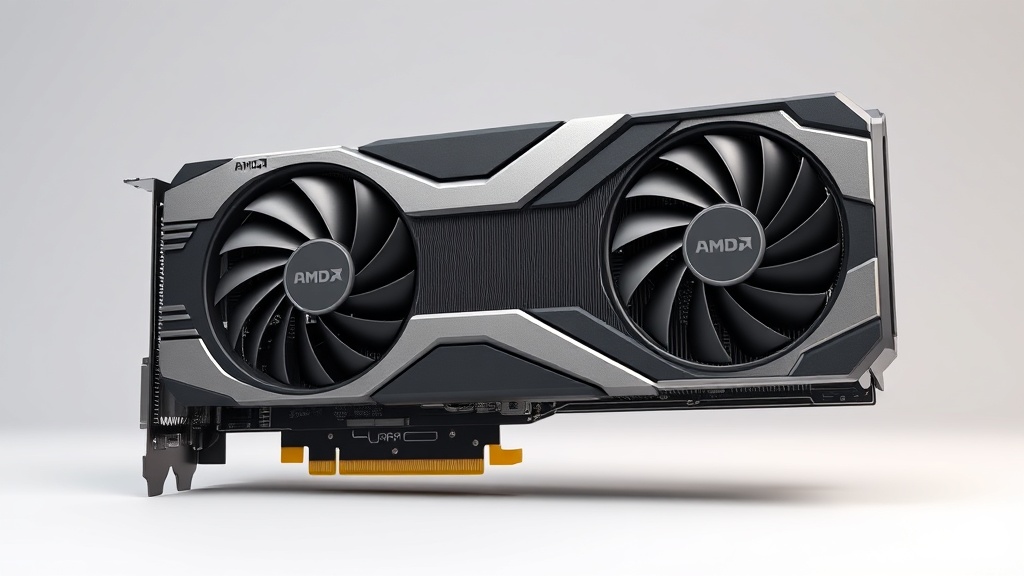
RX 7900 XTX XTX
VRAM
24GB GB
FP32 TFLOPS
61 TFLOPS

Provider Marketplace

Cheapest
$0.35/hour
Starting from
Best Value
$0.35/hour
Starting from
Enterprise Choice
$899.00/month
Starting from

All Cloud Providers

2 Options available
Hostkey favicon
HostkeyCheapest
On-DemandGlobal Availability
$0.35/ hour
Estimated Cost
Provision
Vast.ai favicon
On-DemandGlobal Availability
$899.00/ month
Estimated Cost
Provision

Compute Performance

FP642.3 TFLOPS TFLOPS
FP3261 TFLOPS TFLOPS
TF32Not Supported TFLOPS
FP16123 TFLOPS TFLOPS
BF16Not Supported TFLOPS
FP8Not Supported TFLOPS
INT8245 TOPS TOPS
INT4Not Supported TOPS

Architecture

MicroarchitectureRDNA 3
Process NodeTSMC N5 + 6nm (chiplet)
Die SizeGCD: 300 mm², MCDs: 37 mm² each (6x)
Transistors57.7B (total)
Compute Units96 CUs
Tensor CoresAI Accelerators: None
RT Cores2nd Gen, 96 RT Accelerators
Matrix Engine
Base Clock1855 MHz
Boost Clock2500 MHz
Transformer Engine
Sparse AccelerationNot Supported
Dynamic Precision

Memory & VRAM

Memory TypeGDDR6
Total Capacity24GB GB
Bandwidth960GB/s
Bus Width384-bit
HBM Stacks
ECC Support
Unified MemoryNot Supported
Compression
NUMA Awareness
Memory PoolingNot Supported

Connectivity & Scaling

InterconnectPCIe
GenerationPCIe Gen 4
IB Bandwidth32 GB/s
PCIe InterfacePCIe Gen 4 x16
CXL Support
TopologyPCIe peer-to-peer
Max GPUs/Node4
Scale-Out
GPUDirect RDMA
P2P Memory

Virtualization

MIG SupportNot Supported
MIG PartitionsN/A
SR-IOVNot Supported
vGPU ReadinessNot Supported
K8s Readiness
GPU SharingTime-Slicing
Virt Efficiency

Power & Efficiency

TDP355 W W
Peak Power400-420 W
Idle Power15-30 W
Perf / Watt0.55-0.65 TFLOPS/W (FP32)
PSU Required750 W (recommended for single GPU system)
Connectors2 x 8-pin PCIe
Thermal LimitsMax GPU temperature: 110°C (junction)
EfficiencyN/A

Physical Design

Form FactorPCIe card
FHFLFull Height, Full Length
Slot Width2.5–3 slots
Dimensions287–320 mm x 123 mm x 51–61 mm
Weight1.6–2.1 kg
CoolingAir cooled (triple-fan)
Rack DensityStandard workstation/server GPU; not rack-density optimized

Thermals & Cooling

AirflowActive cooling (vendor-specific CFM)
Temp Range0°C to 45°C
ThrottlingThermal-based clock reduction at Tjunction limit
Noise Level
Liquid CoolingAir-cooled
DC HeatLow (workstation class)

Software Ecosystem

CUDANot Supported
ROCmROCm 5.x community support
oneAPINot Supported
PyTorchCommunity supported
TensorFlowCommunity supported
JAXExperimental via ROCm
HuggingFaceCommunity support
Triton ServerLimited/Experimental
DockerCommunity images available
Compiler StackROCm LLVM-based stack
Kernel OptimStandard driver-based support
Driver StabilityRapid-release cadence

Server & Deployment

OEM AvailabilityTier-1 OEMs: Dell, HPE, Lenovo, Supermicro
Preconfigured4U workstation towers, 2U rack-mount kits
DGX/HGXNot applicable for DGX or HGX systems
Rack-ScaleStandard PCIe connectivity, no NVLink or InfiniBand
Edge DeploySuitable for edge deployments with adequate cooling solutions due to high TDP
Ref ArchitecturesNVIDIA RTX Studio, professional visualization solutions

System Compatibility

CPU PairingHigh-end desktop or workstation CPU recommended (e.g., AMD Ryzen 7000 series, Intel Core i9 13th Gen, or AMD Threadripper PRO)
NUMAStandard NUMA behavior
Required PCIePCIe Gen 4 x16 recommended
MotherboardRequires full-length PCIe x16 slot with adequate physical clearance and power connectors
Rack PowerContact vendor for rack power planning
BIOS LimitsResizable BAR and Above 4G decoding recommended; SR-IOV Not Supported
CXL ReadyNo CXL memory expansion
OS CompatSupported on major Linux distributions (RHEL, Ubuntu LTS) and Windows 10/11

Benchmarks & Throughput

Structured Sparsity

Not Supported

Transformer Throughput

Not Supported

Multi-GPU Scalability

Scaling Efficiency

Single GPUThe RX 7900 XTX operates efficiently as a single GPU with high performance for tasks that fit within its VRAM and compute capabilities.
2-GPUScaling is limited by PCIe Gen4 bandwidth, with potential contention on the PCIe lanes affecting P2P communication.
4-GPUScaling is further constrained by the lack of NVLink, relying solely on PCIe Gen4 bandwidth, which can lead to significant bottlenecks in data transfer between GPUs.
8-GPUWithout NVLink or NVSwitch, scaling is heavily limited by PCIe bandwidth and latency, resulting in diminishing returns as more GPUs are added.
64+ GPUInfiniBand or high-speed Ethernet is required to mitigate inter-node communication overhead, but PCIe limitations still restrict intra-node scaling efficiency.

Scaling Characteristics

Cross-Node LatencyGPUDirect RDMA can be utilized to reduce latency across nodes, but the absence of NVLink means higher latency compared to NVLink-enabled systems.
Network BottlenecksThe primary bottleneck is the Host-to-Device bridge due to PCIe bandwidth limitations and the absence of NVLink for direct GPU-to-GPU communication.
ParallelismSupports Data Parallelism effectively; Model, Pipeline, and Tensor Parallelism are possible but may be limited by interconnect bandwidth and latency.

Workload Readiness

LLM Training

The RX 7900 XTX, based on the RDNA 3 architecture, offers substantial VRAM (24GB) which is suitable for training models up to 70B parameters in a single-node setup. Multi-node scalability is limited due to lack of specialized interconnects.

LLM Inference

With high VRAM and compute power, it can handle large models efficiently, providing good token-per-second throughput. Suitable for inference of models up to 70B parameters with adequate KV cache headroom.

Vision Training

Excellent performance for vision tasks due to high compute throughput and memory bandwidth, making it suitable for large-scale vision model training.

Diffusion Models

Capable of handling diffusion models efficiently due to high VRAM and compute capabilities, supporting complex generative tasks.

Multimodal AI

Well-suited for multimodal AI tasks, leveraging its high VRAM and compute power to handle diverse data types and large model architectures.

Reinforcement Learning

Strong performance in reinforcement learning scenarios, benefiting from high compute throughput and memory capacity for complex environments.

HPC / Simulation

Limited FP64 support compared to professional-grade GPUs, making it less ideal for HPC simulations that require high double precision performance.

Scientific Computing

While not optimized for FP64, it can still handle scientific computing tasks that are less dependent on double precision, leveraging its high overall compute power.

Edge Inference

Not ideal for edge inference due to high power consumption (TDP) and large form factor, better suited for data center environments.

Real-Time Serving

Capable of real-time AI serving with high throughput and low latency, suitable for demanding AI applications in controlled environments.

Fine-Tuning

High VRAM allows for efficient full fine-tuning of large models, making it suitable for tasks requiring extensive model updates.

LoRA Efficiency

Supports LoRA fine-tuning efficiently due to its ample VRAM, allowing for parameter-efficient training of large models.

Market Authority

Research Citations

Limited; RX 7900 XTX is occasionally referenced in academic papers for cost-effective deep learning or graphics workloads, but not as a primary research accelerator.

Community Benchmarks

Widely benchmarked in enthusiast and open-source communities for gaming and some AI workloads (e.g., Stable Diffusion), but not in standardized MLPerf or enterprise contexts.

GitHub Support

Moderate; ROCm support for RX 7900 XTX is available, with active community repositories and scripts for PyTorch and Stable Diffusion, though compatibility and performance may lag behind NVIDIA counterparts.

Key Strengths

Excels in high-resolution gaming and content creation.

  • ·4K Gaming: Optimized for smooth performance at 4K resolutions.
  • ·Ray Tracing: Improved ray tracing performance over previous generations.
  • ·Content Creation: Strong performance in video editing and 3D rendering tasks.

Limitations

High power usage and potential availability issues.

  • ·Power Consumption: Higher power draw compared to some competitors.
  • ·Availability: Potential supply constraints at launch.
  • ·Ray Tracing: Ray tracing performance may lag behind NVIDIA's latest offerings.

Expert Insight

The RX 7900 XTX represents a powerful alternative for diversified workloads. When comparing cloud providers, consider not just the hourly rate, but also the interconnect bandwidth (InfiniBand/NVLink) and regional availability which can significantly impact total cost of ownership for large-scale training.

Glossary Terms

FP32 TFLOPS
VRAM
TDP
Cores
Information updated daily. Cloud pricing subject to vendor availability.