AMD · 2025-01-01
Instinct MI300X
MI300X
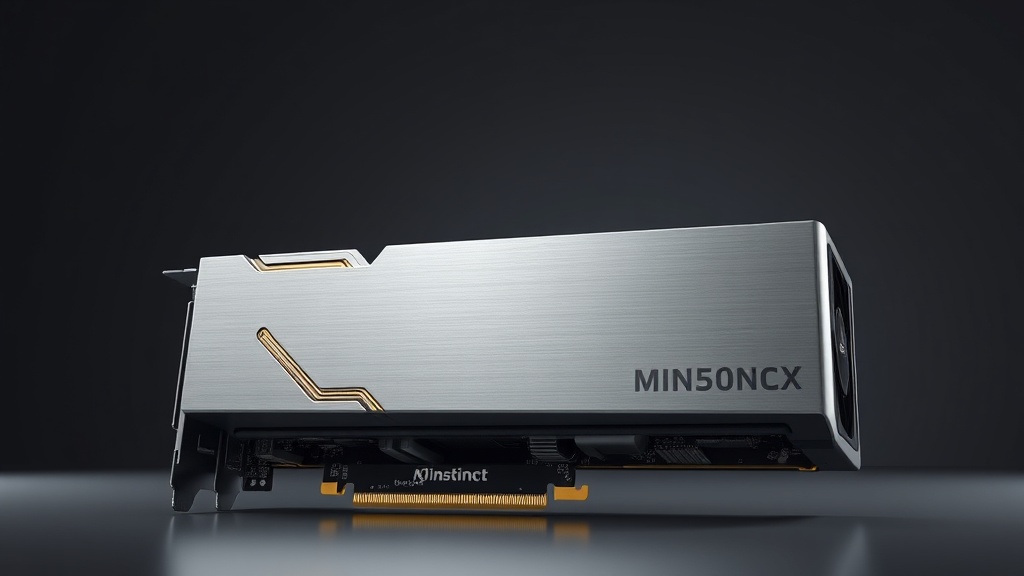
The AMD Instinct MI300X discrete GPU is based on next-generation AMD CDNA 3 architecture, featuring 304 high-throughput compute units, AI-specific functions, and 192 GB of HBM3 memory. It offers outstanding performance for demanding AI and HPC applications, with a focus on generative AI, machine learning, and inferencing.
Provider Marketplace
All Cloud Providers
Compute Performance
Architecture
Memory & VRAM
Connectivity & Scaling
Virtualization
Power & Efficiency
Physical Design
Thermals & Cooling
Software Ecosystem
Server & Deployment
System Compatibility
Benchmarks & Throughput
Structured Sparsity
Not Supported
Transformer Throughput
Supported (AMD XDNA AI Engine / Matrix Core)
Multi-GPU Scalability
Scaling Efficiency
Scaling Characteristics
Workload Readiness
LLM Training
The Instinct MI300X is highly suitable for training large language models, including 400B+ parameters, especially in multi-node configurations due to its advanced architecture and substantial VRAM capacity.
LLM Inference
Optimized for high token-per-second throughput and ample KV cache headroom, making it ideal for inference tasks with large models.
Vision Training
Well-suited for vision training tasks, leveraging its high computational throughput and memory bandwidth to efficiently handle large datasets and complex models.
Diffusion Models
Capable of efficiently training and running diffusion models due to its high parallel processing power and memory capacity.
Multimodal AI
Highly effective for multimodal AI applications, benefiting from its ability to handle diverse data types and large model architectures simultaneously.
Reinforcement Learning
Excellent for reinforcement learning workloads, providing the necessary computational power and memory bandwidth for complex simulations and model training.
HPC / Simulation
Strong support for HPC simulations with robust FP64 performance, making it suitable for scientific and engineering applications requiring high precision.
Scientific Computing
Ideal for scientific computing tasks, offering high double-precision performance and memory capacity for large-scale computations.
Edge Inference
Less suitable for edge inference due to potentially higher power consumption and larger form factor, which are not optimal for edge deployments.
Real-Time Serving
Capable of real-time AI serving with high throughput and low latency, suitable for demanding AI applications requiring quick response times.
Fine-Tuning
Highly efficient for full fine-tuning tasks, thanks to its large VRAM capacity and computational power.
LoRA Efficiency
Efficient for LoRA fine-tuning, providing sufficient resources for parameter-efficient training methods.
Market Authority
Cloud Adoption
AMD confirmed Microsoft Azure adoption (public announcement, Nov 2023).
Supercomputer Usage
Confirmed in El Capitan (DOE/Livermore), Frontier (upgrade), and other US DOE exascale systems.
Research Citations
Limited; early-stage citations in arXiv and conference preprints as of H1 2024.
Community Benchmarks
Sparse; some preliminary results from AMD and select academic labs, but not widely available.
GitHub Support
Initial ROCm support for MI300X present; growing but not yet widespread in major ML repos.
Key Strengths
The MI300X excels in AI and HPC workloads with its advanced architecture.
- ·AI Training: Optimized for large-scale AI model training with high throughput.
- ·HPC Performance: Delivers exceptional performance for high-performance computing tasks.
- ·Memory Bandwidth: Features high memory bandwidth for data-intensive applications.
Limitations
The MI300X has some limitations in terms of availability and specific workload optimizations.
- ·Availability Constraints: May have limited availability due to high demand and production constraints.
- ·Workload Optimization: While strong in AI, may not be as optimized for certain niche workloads compared to competitors.
Also in the Lineup
Expert Insight
The Instinct MI300X represents a powerful alternative for diversified workloads. When comparing cloud providers, consider not just the hourly rate, but also the interconnect bandwidth (InfiniBand/NVLink) and regional availability which can significantly impact total cost of ownership for large-scale training.