NVIDIA · October 2022
GeForce RTX 4090
Founders Edition
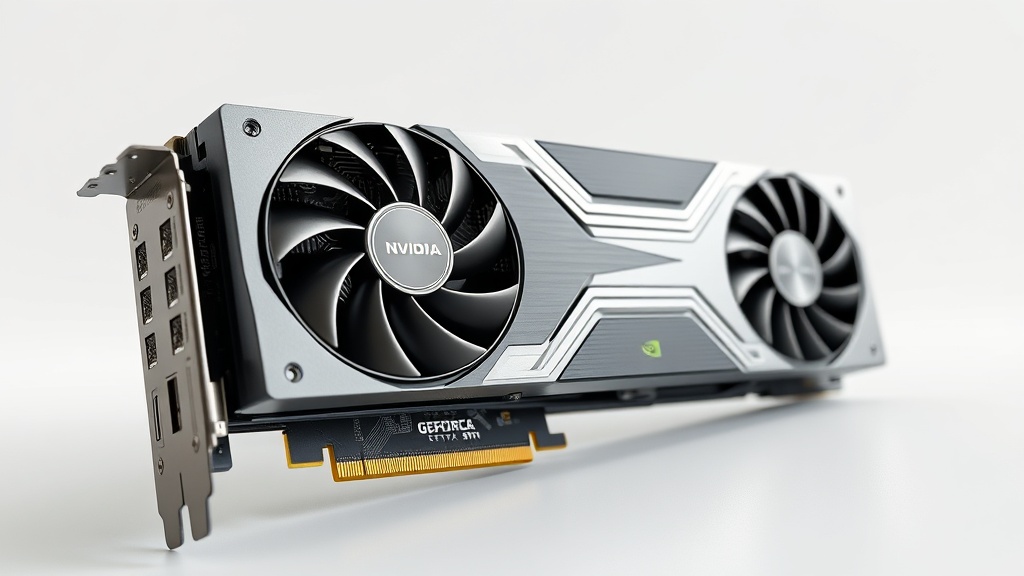
The NVIDIA GeForce RTX 4090 Founders Edition is a high-end consumer GPU designed for enthusiasts and professionals. It is part of the Ada Lovelace architecture, offering significant performance improvements over previous generations. Targeted at gamers and content creators, it features advanced ray tracing and AI capabilities, making it ideal for demanding applications and next-gen gaming experiences.
Provider Marketplace
Compute Performance
Architecture
Memory & VRAM
Connectivity & Scaling
Virtualization
Power & Efficiency
Physical Design
Thermals & Cooling
Software Ecosystem
Server & Deployment
System Compatibility
Benchmarks & Throughput
Structured Sparsity
Not Supported
Transformer Throughput
Not Supported
Multi-GPU Scalability
Scaling Efficiency
Scaling Characteristics
Workload Readiness
LLM Training
The GeForce RTX 4090, based on the Ada Lovelace architecture, is suitable for training models up to 70B parameters in a single-node setup due to its high VRAM capacity of 24GB. Multi-node setups can extend this capability further.
LLM Inference
With its 4th-gen Tensor cores, the RTX 4090 is highly efficient for inference tasks, providing excellent token-per-second performance and sufficient KV cache headroom for large models.
Vision Training
The RTX 4090 excels in vision training tasks due to its high CUDA core count and advanced architecture, making it ideal for complex image processing and deep learning workloads.
Diffusion Models
The GPU's substantial VRAM and Tensor core capabilities make it well-suited for diffusion model training and inference, handling large datasets and complex computations efficiently.
Multimodal AI
The RTX 4090's robust architecture supports multimodal AI tasks effectively, leveraging its high computational power and memory bandwidth to process diverse data types simultaneously.
Reinforcement Learning
The GPU's high throughput and efficient parallel processing make it a strong candidate for reinforcement learning workloads, enabling rapid simulation and model updates.
HPC / Simulation
While the RTX 4090 offers limited FP64 performance, it can still handle HPC simulations that do not heavily rely on double precision, benefiting from its overall computational power.
Scientific Computing
For scientific computing tasks that require high precision, the RTX 4090 may not be optimal due to its limited FP64 capabilities, but it can still perform well in less precision-critical applications.
Edge Inference
With a TDP of 450W, the RTX 4090 is not ideal for edge inference due to its high power consumption and large form factor, better suited for data center environments.
Real-Time Serving
The RTX 4090's high performance and low latency make it suitable for real-time AI serving, providing rapid inference capabilities for demanding applications.
Fine-Tuning
The GPU's 24GB VRAM supports full fine-tuning of large models efficiently, allowing for comprehensive updates to model parameters.
LoRA Efficiency
The RTX 4090 is highly efficient for LoRA fine-tuning, leveraging its advanced architecture to optimize parameter updates with lower VRAM requirements.
Market Authority
Research Citations
Moderate; GeForce RTX 4090 is cited in a growing number of arXiv and peer-reviewed research papers for deep learning and computer vision experiments, especially in academic and hobbyist contexts.
Community Benchmarks
Extensive; widely benchmarked in community forums (Reddit, Hacker News), enthusiast sites (AnandTech, Tom's Hardware), and YouTube channels for AI, gaming, and rendering workloads.
GitHub Support
High; numerous open-source repositories provide scripts, Dockerfiles, and configuration guides for optimizing deep learning frameworks (PyTorch, TensorFlow) on RTX 4090.
Key Strengths
Excels in high-resolution gaming and content creation tasks.
- ·4K Gaming: Delivers exceptional performance in 4K gaming with ray tracing.
- ·Content Creation: Accelerates rendering and video editing tasks.
- ·AI Workloads: Supports AI development with Tensor Cores.
Limitations
High cost and power requirements are key considerations.
- ·Cost: Premium pricing limits accessibility to enthusiasts.
- ·Power Demand: High power draw necessitates a robust power supply.
- ·Size: Large physical size may not fit in all cases.
Also in the Lineup
Expert Insight
The GeForce RTX 4090 represents a strategic leap in AI compute. When comparing cloud providers, consider not just the hourly rate, but also the interconnect bandwidth (InfiniBand/NVLink) and regional availability which can significantly impact total cost of ownership for large-scale training.