NVIDIA · Q2 2023
GB300
NVL72
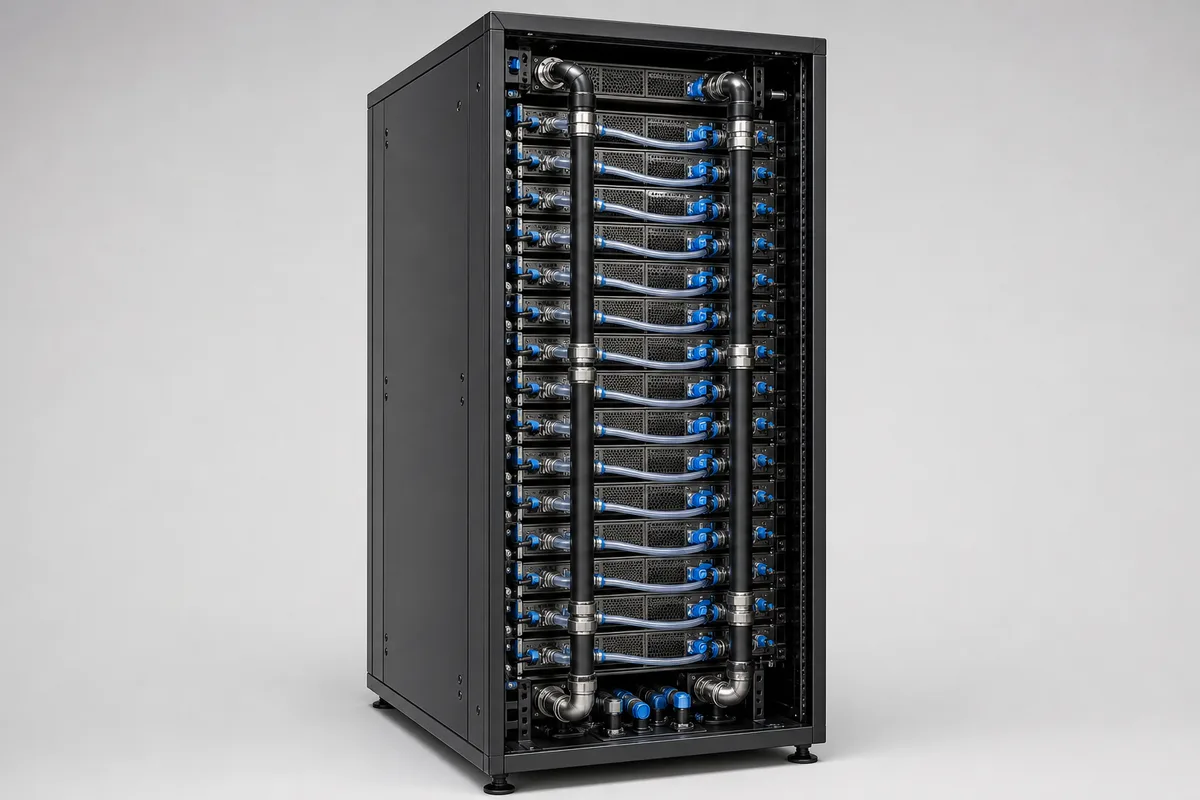
The NVIDIA GB300 NVL72 is a high-performance GPU designed for datacenter applications, particularly in AI and HPC workloads. It is part of NVIDIA's latest architecture, offering significant improvements in performance and efficiency. The NVL72 variant is optimized for multi-GPU configurations, making it ideal for large-scale AI training and inference tasks.
Architecture
Memory & VRAM
Connectivity & Scaling
Power & Efficiency
Physical Design
Thermals & Cooling
Server & Deployment
Multi-GPU Scalability
Scaling Characteristics
Workload Readiness
LLM Inference
It’s purpose-built for test-time scaling inference and AI reasoning tasks.
Diffusion Models
GB300 NVL72 introduces cutting-edge capabilities for diffusion-based video generation models.
Real-Time Serving
It’s purpose-built for test-time scaling inference and AI reasoning tasks.
Market Authority
Enterprise Cases
["Wistron Opens Advanced Manufacturing Plant to Produce NVIDIA AI Systems","NVIDIA DGX GB300 Comes Online at Naval Postgraduate School"]
Key Strengths
The GB300 NVL72 excels in AI training and inference, offering superior performance for deep learning models. Its architecture is optimized for high throughput and low latency, making it a top choice for scientific computing and complex simulations. The NVL72's multi-GPU capabilities enhance its performance in parallel processing tasks.
Limitations
The GB300 NVL72's high power consumption and cooling requirements may limit its use in environments with restricted power or cooling capabilities. Its availability might be constrained due to high demand and production limitations. Users should ensure compatibility with existing infrastructure to fully leverage its capabilities.
Also in the Lineup
Expert Insight
The GB300 represents a strategic leap in AI compute. When comparing cloud providers, consider not just the hourly rate, but also the interconnect bandwidth (InfiniBand/NVLink) and regional availability which can significantly impact total cost of ownership for large-scale training.