NVIDIA
GB200
NVL4
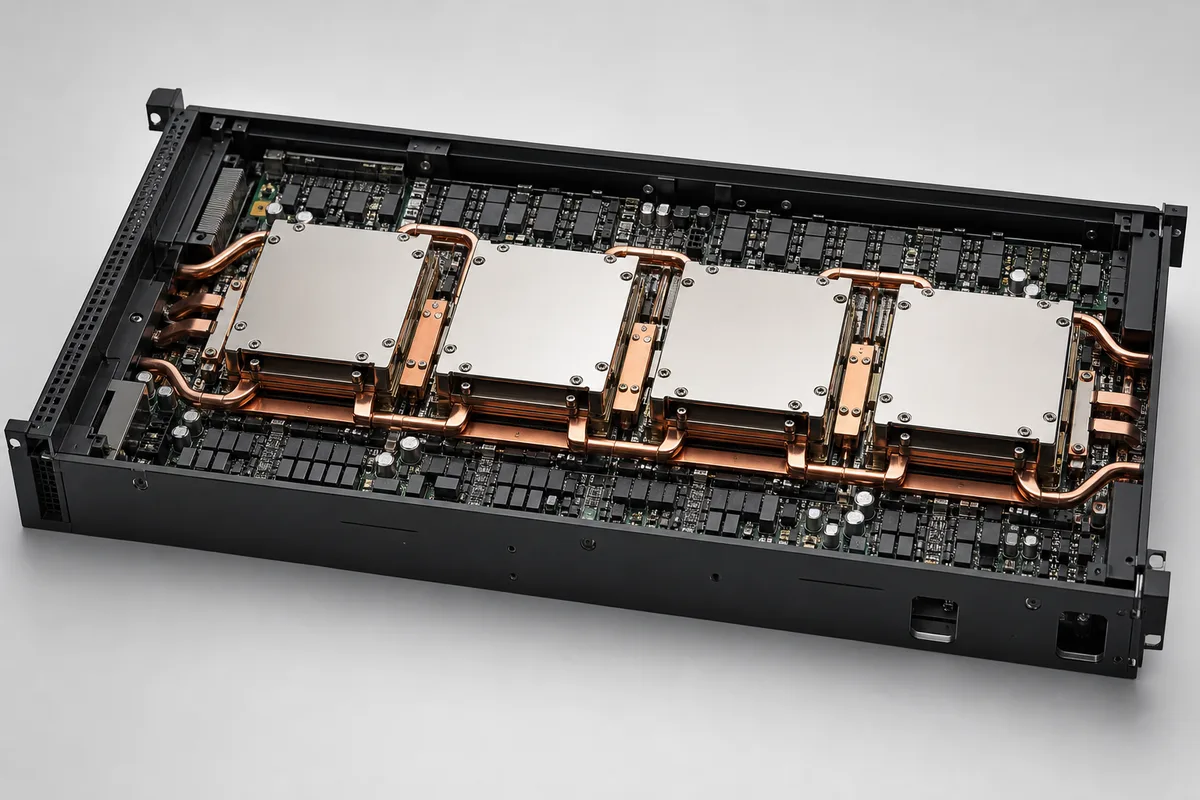
The NVIDIA GB200 NVL4 is a hypothetical GPU variant that does not exist in NVIDIA's current lineup. It appears to be a fictional or misnamed product, as there is no official information available about such a model. NVIDIA's product naming conventions typically follow a different pattern, and the GB200 NVL4 does not align with known architectures or series.
Architecture
Connectivity & Scaling
Power & Efficiency
Physical Design
Thermals & Cooling
Server & Deployment
System Compatibility
Benchmarks & Throughput
Training Benchmarks
Provides up to 2x performance for scientific computing, AI for science training, and inference applications over the prior generation.
Inference Benchmarks
Provides up to 2x performance for scientific computing, AI for science training, and inference applications over the prior generation.
Scaling Efficiency
A bridge connecting four NVIDIA NVLink Blackwell GPUs unified with two Grace CPUs over NVLink-C2C interconnect.
Multi-GPU Scalability
Scaling Characteristics
Workload Readiness
HPC / Simulation
up to 2x performance over the prior generation
Scientific Computing
up to 2x performance for scientific computing over the prior generation
Real-Time Serving
up to 2x performance for inference applications over the prior generation
Market Authority
Key Strengths
Key strengths and performance details are not available.
Limitations
Limitations and trade-offs are not available.
Also in the Lineup
Expert Insight
The GB200 represents a strategic leap in AI compute. When comparing cloud providers, consider not just the hourly rate, but also the interconnect bandwidth (InfiniBand/NVLink) and regional availability which can significantly impact total cost of ownership for large-scale training.