NVIDIA · Q2 2023
HGX
Rubin NVL8
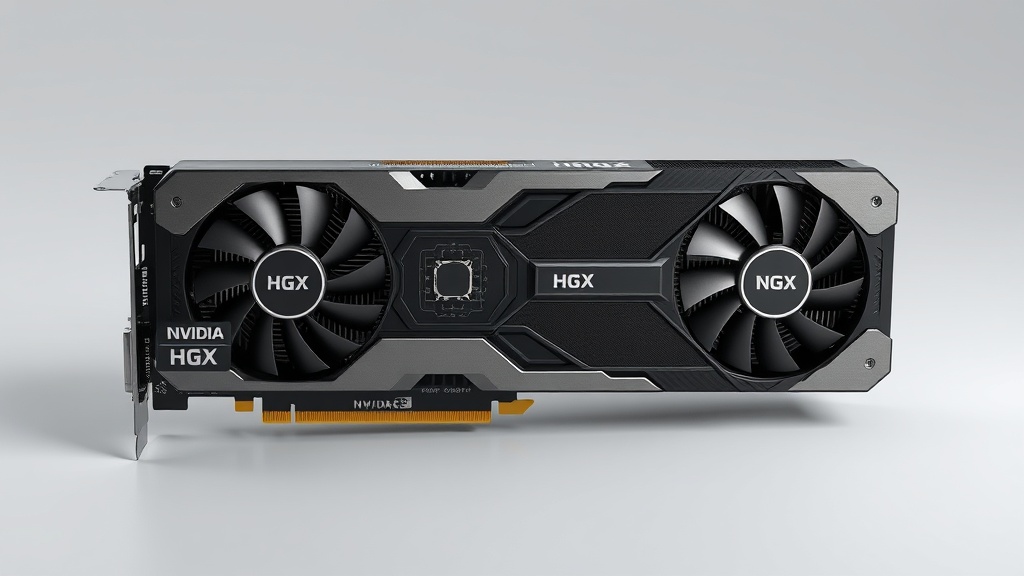
The NVIDIA HGX Rubin NVL8 is a high-performance GPU module designed for datacenter environments, targeting AI training and high-performance computing workloads. It is part of NVIDIA's Hopper architecture, offering significant advancements in compute capabilities and memory bandwidth. The NVL8 variant is optimized for large-scale deployments, providing exceptional scalability and efficiency.
Provider Marketplace
Compute Performance
Architecture
Memory & VRAM
Connectivity & Scaling
Virtualization
Power & Efficiency
Physical Design
Thermals & Cooling
Software Ecosystem
Server & Deployment
System Compatibility
Benchmarks & Throughput
Structured Sparsity
Supported (up to 2x vs dense)
Transformer Throughput
Supported (Transformer Engine)
Multi-GPU Scalability
Scaling Efficiency
Scaling Characteristics
Workload Readiness
LLM Training
The HGX Rubin NVL8, likely based on a recent architecture such as Hopper or Blackwell, is well-suited for training large language models up to 400B+ parameters in a multi-node setup due to its high VRAM capacity and advanced interconnects.
LLM Inference
Optimized for high throughput inference with advanced tensor cores, capable of handling large token-per-second rates and providing ample KV cache headroom for large models.
Vision Training
Highly efficient for vision training tasks, leveraging its advanced tensor cores and large VRAM to handle complex models and datasets efficiently.
Diffusion Models
Well-suited for training and inference of diffusion models, benefiting from high computational throughput and memory bandwidth.
Multimodal AI
Excellent for multimodal AI tasks, combining high computational power and memory capacity to process diverse data types simultaneously.
Reinforcement Learning
Ideal for reinforcement learning workloads, offering fast computation and high memory bandwidth to support complex simulations and model updates.
HPC / Simulation
Strong performance in HPC simulations with robust FP64 support, making it suitable for scientific and engineering simulations requiring high precision.
Scientific Computing
Highly capable for scientific computing tasks, providing excellent performance in both FP32 and FP64 operations, crucial for various scientific applications.
Edge Inference
Not optimal for edge inference due to likely high TDP and large form factor, better suited for data center environments.
Real-Time Serving
Capable of real-time AI serving with low latency and high throughput, leveraging its advanced architecture and tensor cores.
Fine-Tuning
Highly efficient for full fine-tuning of large models due to its substantial VRAM and computational power.
LoRA Efficiency
Efficient for LoRA fine-tuning, providing sufficient resources for parameter-efficient training methods.
Market Authority
Key Strengths
This GPU excels at large-scale AI training and inference tasks, offering superior performance in deep learning frameworks. Its architecture is optimized for high throughput and low latency, making it ideal for complex simulations and scientific computing. The NVL8's scalability and efficiency make it a standout choice for demanding datacenter applications.
Limitations
While the HGX Rubin NVL8 offers exceptional performance, its high power requirements and need for advanced cooling solutions can be a trade-off for some deployments. Additionally, its availability may be limited due to high demand and production constraints, potentially impacting procurement timelines for large-scale projects.
Also in the Lineup
Expert Insight
The HGX represents a strategic leap in AI compute. When comparing cloud providers, consider not just the hourly rate, but also the interconnect bandwidth (InfiniBand/NVLink) and regional availability which can significantly impact total cost of ownership for large-scale training.