NVIDIA · Q4 2023
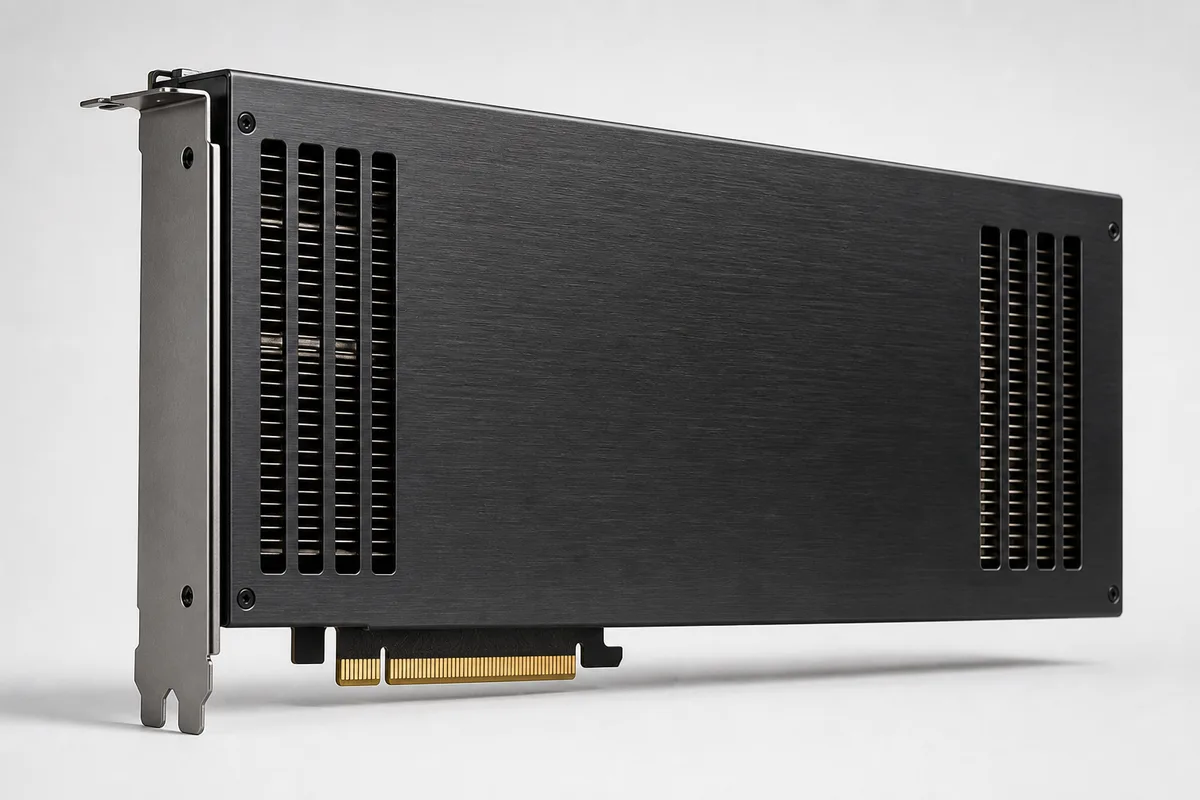
RTX PRO 6000 Blackwell Server Edition
PCIe Gen 5
The NVIDIA RTX PRO 6000 Blackwell Server Edition is a high-performance GPU designed for datacenter environments. It targets AI and data analytics workloads, leveraging the Blackwell architecture to deliver enhanced performance and efficiency. This variant is optimized for server use, offering advanced features like PCIe Gen 5 connectivity for improved data throughput.
Provider Marketplace
All Cloud Providers
Estimates only — rates are collected automatically from public provider pages and may be out of date. Prices vary by region, commitment term, and availability, and typically exclude storage, egress, and tax. Confirm current pricing with the provider before purchasing. Last collected .
Compute Performance
Architecture
Memory & VRAM
Connectivity & Scaling
Virtualization
Power & Efficiency
Physical Design
Thermals & Cooling
Server & Deployment
System Compatibility
Multi-GPU Scalability
Scaling Characteristics
Workload Readiness
LLM Inference
supported
Multimodal AI
supported
HPC / Simulation
supported
Scientific Computing
supported
Market Authority
Key Strengths
This GPU excels at AI training and inference tasks, offering significant performance improvements over previous generations. Its architecture is optimized for scientific visualization and data analytics, making it a strong choice for research institutions and enterprises needing high computational power.
Limitations
While offering cutting-edge performance, the RTX PRO 6000 Blackwell Server Edition may have higher power consumption compared to other models, requiring efficient power management. Availability might be limited initially due to high demand and production constraints, potentially impacting deployment timelines.
Also in the Lineup
Expert Insight
The RTX PRO 6000 Blackwell Server Edition represents a strategic leap in AI compute. When comparing cloud providers, consider not just the hourly rate, but also the interconnect bandwidth (InfiniBand/NVLink) and regional availability which can significantly impact total cost of ownership for large-scale training.